Shopping Cart
(0)

Cold Weather Tire Pressure: Your Simple Morning Routine
|
|
Time to read 3 min

|
|
Time to read 3 min
If you’re searching for cold weather tire pressure, use this repeatable cold-morning routine: temps drop PSI fast, TPMS warns late, and a portable inflator keeps you on placard—every time. Winter driving is easier (and safer) when you set pressure cold to the door-jamb PSI and stick to one consistent workflow.
Table of contents
Air contracts as it cools, so tire pressure falls about 1 psi for every 10°F change (≈ 0.07 bar per 5–6 °C). That’s why a tire set perfectly on a mild afternoon can wake up 3–4 psi low after an overnight snap. Cold also exposes tiny leaks and loose valve cores that summer hides. Skip the “winter bonus.” Restore placard PSI cold. That protects handling, ABS/ESC calibration, tread wear, and fuel economy the way your car was engineered. Driving to a warm garage before checking can skew readings upward; check outdoors, not inside a heated bay—expect about ~2 psi of apparent difference with a 20°F indoor/outdoor gap. And don’t bleed hot after a highway run; that “fix” will leave you under-inflated by morning when the tire cools back down.
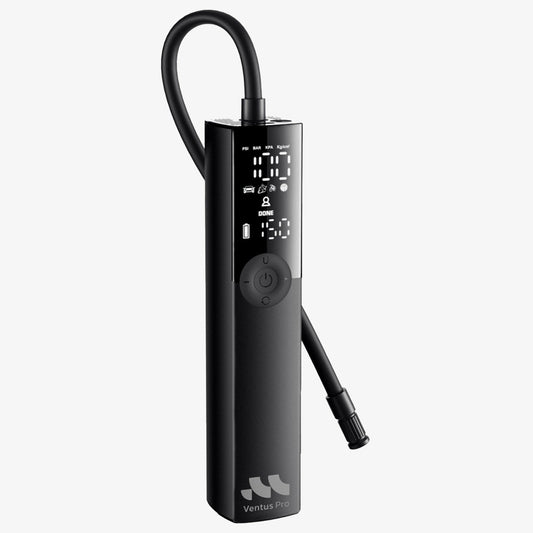
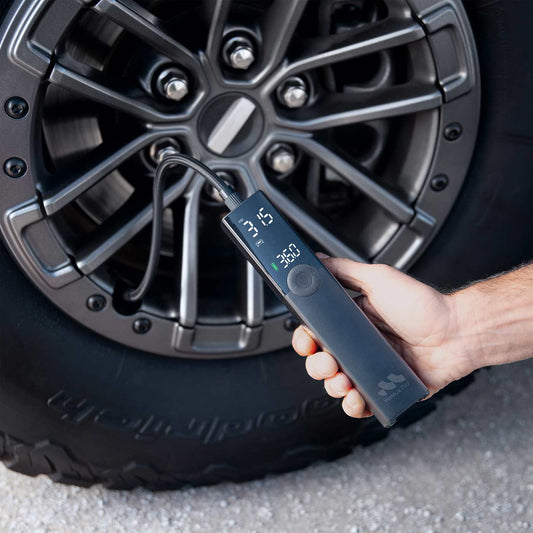
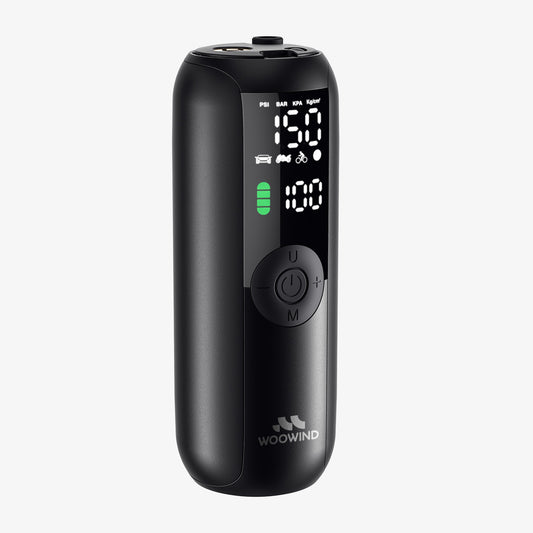
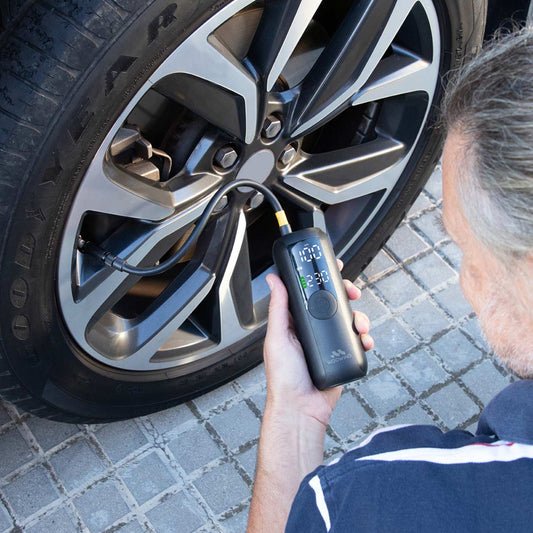
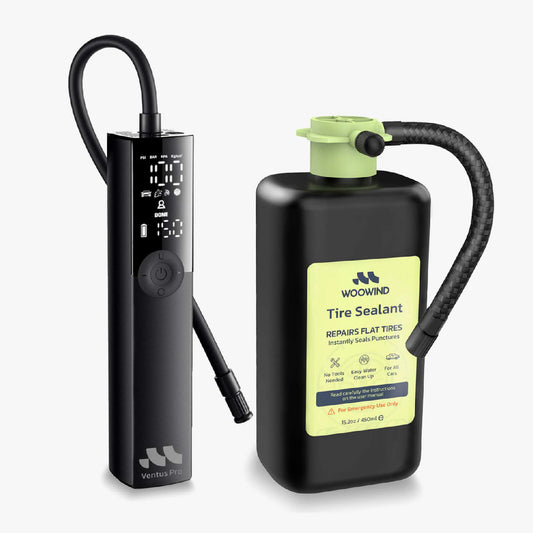
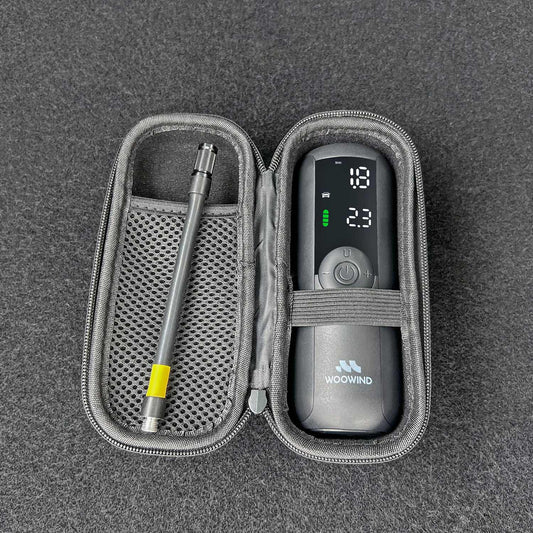
Do this: park ≥3 hours, measure outside, set to door-jamb PSI (front/rear), then recheck next morning. Adjust in 1–2 psi steps; follow staggered values if your placard lists different front/rear pressures. Avoid: overinflating for mpg, bleeding hot at the pump, and trusting random forecourt gauges. Consistency beats perfection, so use the same portable inflator every time. Two compact options: LP1 for cars/SUVs; Ventus Pro for fast top-offs with a bright digital readout. Keep valve caps with seals installed to limit micro-losses when temps bounce.
TPMS is a safety net—not a maintenance plan. It typically warns around 25% below the placard cold PSI, which is great for catching severe under-inflation but too late for optimal braking, wear, and comfort. In winter you may see the lamp at dawn and watch it clear after a few miles as the tires warm—use that as a nudge to correct the cold PSI, not as permission to ignore it. If one tire keeps dropping 1–2 psi per week, look for a puncture, bead leak, or loose valve core instead of topping indefinitely. Set pressures cold, then let TPMS watch for real faults.
This is the workflow that actually moves the needle all winter:
Check cold outdoors, sticking to one unit (psi or bar).
Top up to placard, small increments, all four corners (and the spare if applicable).
Log ambient temp + PSI so you can predict the next swing.
Recheck before highway trips; correct cold PSI stabilizes heat at speed, protects tread blocks, and can improve fuel economy by up to ~3% versus running soft.
Five minutes, once a week. If multiple drivers share the car, teach everyone the door-jamb routine so the habit sticks.
No. Restore placard PSI cold. Overinflation reduces grip and lengthens braking on cold pavement.
Usually no. Follow the placard unless your owner’s manual specifies otherwise for winter fitments.
Yes—temperature at work. Correct the cold PSI and don’t rely on the lamp for routine maintenance.
Monthly at minimum, plus after big temperature swings and before long drives. Weekly during deep cold works best.
They vary. Use a portable digital inflator and the same method every time for consistent results.
Bottom line: Stay safe— cold-check with your inflator before you roll.
Tim Huang
Tim Huang has extensive experience in the development and optimization of electric air pumps , specializing in portable tire inflators, electric air pumps, and wireless inflation solutions . With a strong background in product development, procurement, and quality assurance , he ensures that every Woowind product meets high performance and reliability standards. Connect with Tim on LinkedIn: Tim Huang

